Clay, Stoneware and Porcelain: What the Material Changes
Clay, stoneware and porcelain shape a vessel’s surface and visual character. Learn what to inspect so you can compare the body, glaze, form, and finish.
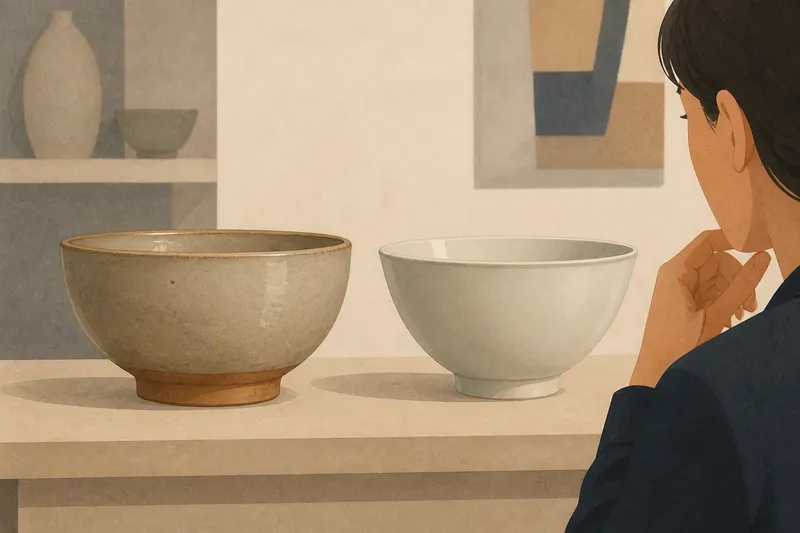
At a gallery shelf, two tea cups sit side by side: one has a warm, exposed foot and a rounded profile; the other has a pale, narrow rim beneath a glossy glaze. Clay, stoneware, and porcelain offer useful clues to those differences, but the vessel itself is the better place to start. Look at the body, the shaping, and the surface together.
What does a ceramic body change?
“Clay” is both the everyday name for raw material and a broad term for ceramic bodies. Stoneware and porcelain are more specific kinds of bodies, made from different combinations of materials and intended to behave differently during firing. Their names suggest possibilities, not a guaranteed appearance.
A ceramic body may show through a glaze, appear at an unglazed foot, or remain visible across the surface. It informs the maker’s choices about form and finish, while shaping, firing, and decoration also affect the result. A vessel’s character is a collaboration, not a label stamped into the clay.
How does stoneware shape a vessel’s presence?
Stoneware may appear buff, gray, brown, or reddish, depending on its body and firing. A glaze can soften or conceal those colors; an exposed foot lets the body register more plainly. Some surfaces show speckles or a granular quality, while others look smooth and even.
A rounded belly, generous handle, or substantial-looking rim can give a stoneware vessel a grounded presence. That impression comes from the form as well as the material. A light-looking stoneware cup and a thick porcelain bowl are both possible, so compare the object’s actual walls, base, and balance rather than relying on the name alone.
Say you are comparing two serving bowls in a gallery. One is stoneware, with a broad curve, a glaze that thins over the rim, and a contrasting exposed foot; the other is porcelain, with a narrower profile and an even pale glaze. Trace each surface from rim to foot. The first bowl’s visible shifts between glaze and bare body draw attention to its curve, while the second’s uninterrupted surface makes its outline easier to follow. Neither is the better bowl; they direct attention differently.
Why can porcelain seem lighter or sharper?
Porcelain is often associated with a pale, fine-grained appearance and crisp edges. In a thin section, some porcelain may transmit light, though that effect depends on the body, thickness, and firing. A light surface can make a painted line or glaze variation stand out; a narrow lip can make the vessel appear precise.
Those impressions are not exclusive to porcelain. A thick-walled porcelain bowl can look solid, and a thin stoneware cup can look restrained. Weight and balance depend on the vessel’s form, wall thickness, handle, and distribution of material. When viewing, notice where the mass appears to sit and how the rim relates to the body.
What can the surface tell you about the body?
A glossy, opaque glaze can make bodies of different colors look similar from a distance. At the foot, where the glaze ends, the body may reappear as a visible border. A transparent glaze can leave more of the body’s color and texture apparent, while a matte finish may make the surface feel quieter.
Look for transitions at the rim, handle join, foot ring, carved marks, or a deliberately bare patch. A dark body beneath a pale slip can create a clear contrast; a pale body can let a subtle painted line remain prominent. These small changes often tell more than a large, uniformly glazed area.
Not every mark needs decoding. If a photograph hides the foot and the glaze conceals the body, guessing the clay type is effort spent inventing certainty. Describe what you can actually see: contour, finish, and the way light rests on the surface.
How should you compare clay, stoneware, and porcelain?
Use the maker’s or gallery’s material information when it is available. If the body is unidentified, visible features can suggest possibilities but may not establish its exact composition. For a useful comparison, record an observation and let that observation guide what you inspect next.
- Check the foot: If the exposed body has a visible color or texture, compare it with the glaze; if the foot is covered or hidden, leave the body unidentified and inspect the rim instead.
- Check the rim: If the edge appears narrow or crisp, note that visual effect; if it is rounded or thick, compare how it meets the vessel’s profile rather than attributing the shape to the material alone.
- Check the wall: If the wall looks thin, note the vessel’s delicate appearance; if it looks thick, note its more substantial appearance and compare the base before judging its overall balance.
- Check the profile: If the foot is narrow and the belly broad, observe how that contrast directs attention; if the profile is straight or tall, follow its outline to see how the shape changes the impression.
- Check the glaze: If it pools, breaks, or turns transparent, trace where those changes occur; if it is opaque and even, focus on the contour and visible unglazed areas instead.
- Check the handle: If it is large or strongly attached, note how it changes the cup’s visual balance; if it is small or understated, compare the rim and body to see which carries more attention.
If handling is allowed, lift the vessel gently and notice its balance as well as its weight. A heavier object is not automatically more durable or more carefully made, and a lighter one is not automatically fragile. For care or practical use, follow the maker’s instructions for that object.
What questions help you read a ceramic vessel?
Can you identify porcelain by its white color?
Not reliably: another pale body or an opaque glaze can also make a vessel look white. Treat color as a visible clue, not a firm identification.
Does stoneware always feel heavier than porcelain?
No. Wall thickness, shape, and balance affect how a vessel feels. A material name alone does not tell you how much mass a particular cup carries.
Why leave part of a vessel unglazed?
An exposed foot can show the body’s color and create a deliberate contrast with the glazed surface. Its visible role may be aesthetic as well as related to the making process.
Which ceramic body should you prefer?
Choose according to the qualities you notice: a grounded surface, a fine edge, visible body color, or a particular balance in the hand. Clay, stoneware, and porcelain are not a ladder of quality; each can serve a different visual intention.
How does material sharpen your looking?
Use clay, stoneware, and porcelain as prompts to inspect where the body shows, how the walls appear, and whether the vessel feels visually grounded or poised. The material name gives context, but the finished object makes that context specific. When a gallery label names the body, compare it with the visible foot, rim, and glaze; when it does not, describe those features without pretending the surface has supplied a full recipe.